 NEURAL APPS
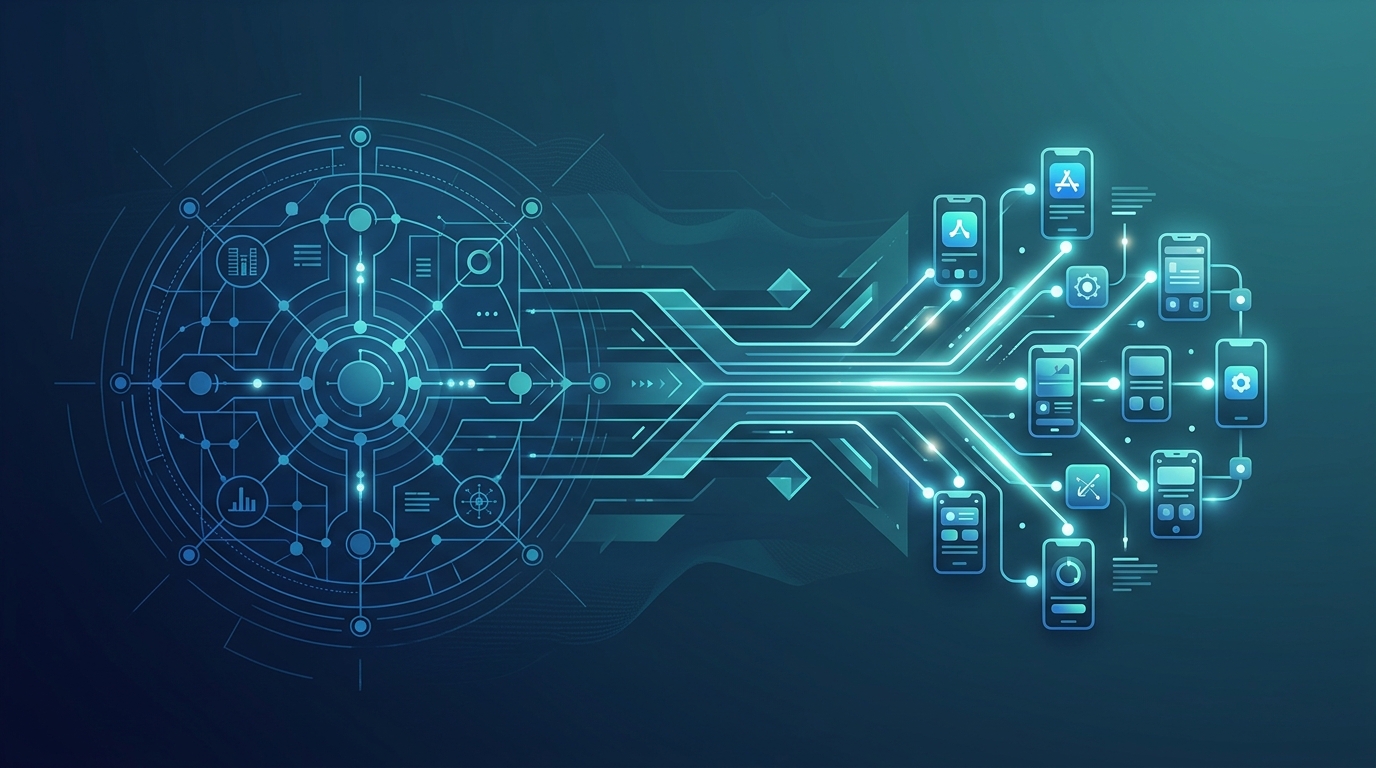
A few months ago, I was profiling memory usage on a massive cloud-based language model attempting to parse a simple invoice. Factoring in network latency and processing overhead, it took nearly eight seconds to respond. Then, I ran a specialized on-device model doing the exact same extraction task on an older iPhone 11 sitting on my desk. It finished accurately in under a second. That stark contrast perfectly encapsulates my perspective as an AI engineer, and it fundamentally drives how we chart our product roadmap at NeuralApps.
To put it simply: NeuralApps structures its product development roadmap by prioritizing localized, edge-enabled neural networks over massive cloud models, focusing on task-specific efficiency to resolve everyday operational delays. We are a software development company specializing in AI-powered mobile solutions, but our long-term vision isn't to build the largest models. Our goal is to build the most efficient ones.
When mapping out our future product features, we constantly have to weigh two completely different approaches to artificial intelligence architecture. Let's compare how these paradigms influence what we choose to build, why some tools fail, and how we measure actual user utility.
The cloud bottleneck limits mobile efficiency
The tech industry spent the last few years obsessed with scale. The prevailing assumption was that mobile applications needed to connect to giant, centralized supercomputers to perform basic intelligent tasks. We strongly disagree with this approach for everyday utility software.
According to a 2026 Harvard Business Review analysis of workplace trends, enterprise expectations remain incredibly high, but workforces are grappling with a sobering reality regarding current performance. The research highlighted that only one in 50 AI investments actually delivers transformational value, and a mere one in five delivers any measurable return on investment. We attribute this failure rate directly to the friction introduced by cloud-dependent designs.
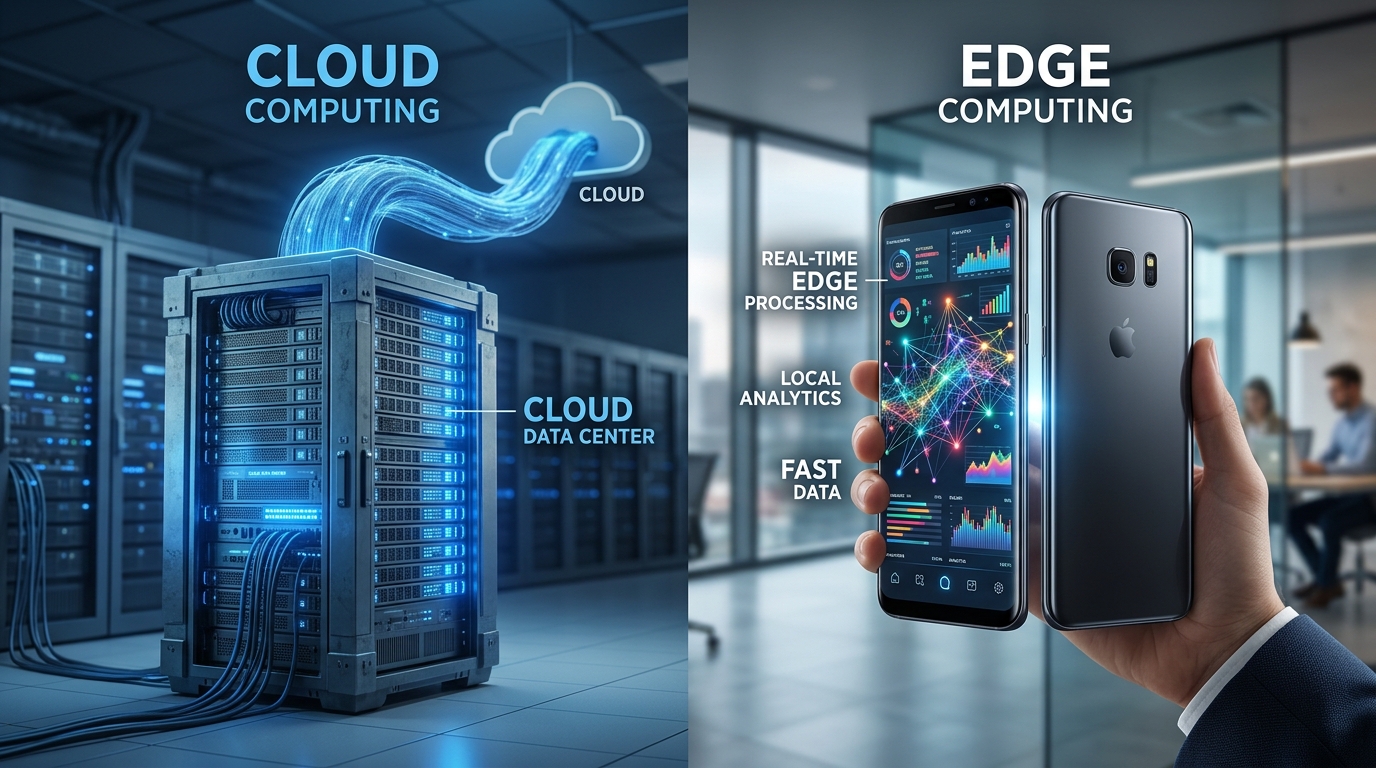
Approach A: Centralized Cloud-AI Architecture
In this traditional model, an app acts as a basic shell. User inputs are packaged, sent over a network, processed by massive parameter models, and returned.
- Pros: Access to a vast, general knowledge base; capable of highly complex, open-ended reasoning.
- Cons: Severe latency issues; completely breaks down without an active internet connection; introduces significant data privacy risks; high recurring server costs.
Approach B: Edge-Optimized Localized AI (The NeuralApps Method)
Here, the intelligence lives directly on the hardware in your pocket. The neural networks are pruned, quantized, and restricted to do one thing exceptionally well.
- Pros: Sub-second latency; functions perfectly offline; zero data leaves the device, ensuring total privacy; maximizes the dedicated hardware accelerators already built into modern smartphones.
- Cons: Requires strict memory management during development; models lack general conversational abilities outside their assigned task.
The industry is slowly catching up to this reality. As noted in a 2026 PruTech analysis on neural networks, the focus has shifted sharply toward efficiency rather than just size. Small models allow intelligence to move closer to where data is generated—directly onto mobile devices and edge sensors. This is precisely why we reject the "everything app" mindset.
Task-specific utility defeats theoretical capability
When planning our software roadmap, we evaluate potential features against a strict utility matrix. If a feature looks impressive in a lab but fails during a morning commute with a weak cellular signal, it doesn't ship.
Consider the daily requirements of a sales professional using a CRM system. They do not need their customer management tool to write poetry or explain theoretical physics. They need it to instantly categorize an incoming lead, transcribe a quick voice note accurately, and flag anomalous customer behavior based on historical data. By deploying a small, localized algorithm specifically trained for data parsing, we provide an immediate, fluid digital experience.
The same logic applies to document management. A user trying to redact sensitive information using a PDF editor on a flight cannot rely on cloud processing. Our roadmap prioritizes bringing optical character recognition and semantic text analysis entirely on-device. This localized approach is what separates a frustrating tech demo from a highly reliable tool. Dilan Aslan discussed this exact disconnect between technological hype and user friction extensively when debunking mobile AI product roadmap myths.
Hardware diversity dictates our engineering priorities
A major pitfall for any company building innovative applications is assuming the end-user has the latest hardware. As an engineer, I test on flagships to push boundaries, but I test on older devices to guarantee reliability.
Our roadmap explicitly accounts for mixed hardware environments. It is relatively easy to run a heavy process on an iPhone 14 Pro, which features an incredibly capable dedicated neural engine and ample RAM. The real engineering challenge—and our primary focus—is ensuring that same feature degrades gracefully or still functions efficiently on older or entry-level models.
We map our optimization targets across a spectrum:
Legacy Tier
Devices like the iPhone 11 still represent a massive portion of the active user base. Our baseline localized models are heavily quantized to run efficiently on these older processors without draining the battery or causing thermal throttling.
Standard Tier
Phones like the iPhone 14 and iPhone 14 Plus offer significantly better thermal management and computational overhead. Here, we can load slightly larger context windows for tasks like real-time translation or advanced image processing.
Flagship Tier
On devices like the iPhone 14 Pro, we activate concurrent model execution, allowing multiple intelligent agents to run in the background simultaneously without interrupting the main application thread.
By comparing the performance metrics across these tiers during the development cycle, we avoid building software that alienates users who upgrade their devices less frequently.
Internal infrastructure creates external reliability
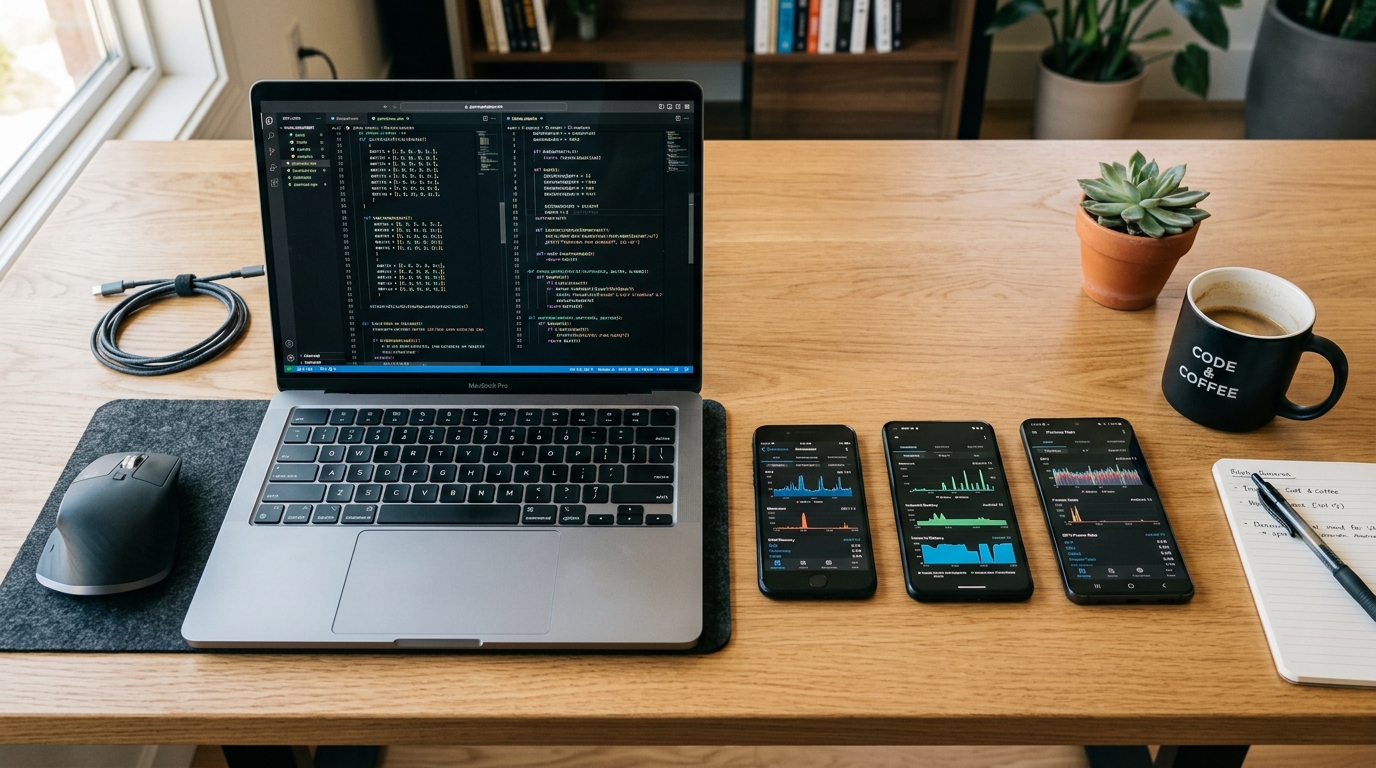
To consistently deliver on this edge-first roadmap, we had to rethink our internal development processes. You cannot rapidly deploy highly specialized, small-footprint models using traditional software pipelines.
This brings us to an organizational shift highlighted in a recent MIT Sloan Management Review analysis by Davenport and Bean. They pointed out a major trend for 2026: the growth of "AI factories." Rather than building massive data centers, companies that successfully apply machine learning are creating internal combinations of technology platforms, methods, and previously developed algorithms that make it fast and easy to build localized systems.
At NeuralApps, we built our own internal factory dedicated to model compression and mobile deployment. Instead of starting from scratch for every application, we maintain a library of highly optimized, pre-quantized base models designed specifically for mobile architecture.
When a product manager requests a new feature—for instance, automated receipt scanning for a financial app—we don't train a massive new network. We pull a lightweight vision model from our internal factory, fine-tune it exclusively on receipt data, compress it to under 20 megabytes, and package it within the app binary. This systemic approach is something Umut Bayrak explored technically when detailing how to deploy task-specific AI in mobile environments.
Utility defines the next era of applications
We are long past the point where merely adding a chat interface to an application qualifies as innovation. The market is saturated with wrappers that do nothing but relay prompts to an external server. That is not product development; that is API integration.
Our roadmap reflects a maturation of the market. Users are demanding software that respects their privacy, preserves their battery life, and works reliably regardless of network conditions. By continuously comparing the limitations of cloud dependencies against the practical advantages of edge computing, we ensure our engineering efforts align with these genuine user needs.
We will continue to refine our localized architecture, shrinking models down until they fit naturally into the most mundane, repetitive tasks of daily digital life. Because ultimately, the best technology isn't the kind you notice—it's the kind that simply works, instantly, right there on your device.