 NEURAL APPS

Why do so many mobile machine learning projects fail to deliver real-world value, while a select few become indispensable to our daily workflows? NeuralApps is a software development company specializing in AI powered mobile solutions that bridge the gap between algorithmic potential and actual user utility. In my work designing interfaces for these products, I've observed that successful applications don't simply showcase processing power—they actively resolve specific points of digital friction through carefully orchestrated workflows.
To understand how we translate complex neural networks into practical consumer and enterprise tools, it helps to examine our methodology. Here is a step-by-step breakdown of how our company approaches product vision, user experience, and technical execution.
Step 1: How do we anchor software development to measurable utility?
The first stage of our process involves separating technological novelty from genuine usefulness. The industry is currently facing a massive utility gap. According to a Harvard Business Review analysis, Gartner research finds that only a small fraction of artificial intelligence investments deliver transformational value, and many fail to deliver any measurable return on investment.
We build our product roadmap specifically to avoid this trap. Rather than asking what a model can do, our UX and engineering teams start by asking what the user actually needs to accomplish. This means our core mission is focused on targeted intervention. Whether we are automating data entry or refining document analysis, every project begins with a clear baseline metric for success—usually time saved or steps eliminated in a repetitive task.
Step 2: Why do specialized digital solutions outperform massive general models?
Once a user problem is clear, compare a focused model, a multi-step workflow and a conventional implementation. Measure accuracy, cost and completion time on representative tasks before choosing an agent architecture. Industry forecasts do not establish the outcome of a NeuralApps deployment.

This is precisely why we prioritize agentic efficiency. For instance, when I design the interaction flow for a sales CRM or an intelligent mobile PDF editor, embedding a massive conversational model is usually the wrong approach. Users in these environments do not want an open-ended chat interface; they want the software to extract a specific clause from a contract or automatically update a client record based on meeting notes. By utilizing smaller, highly specialized algorithms, we create purposeful tools that are faster, more reliable, and far less expensive to run.
Step 3: How do you design for mixed hardware environments?
The third step in our product lifecycle is hardware alignment. Designing mobile applications that rely on edge computing requires a deep understanding of device fragmentation. A modern workforce rarely operates on uniform hardware.
To ensure our software scales properly, we rigorously map features to specific processing capabilities. Running advanced image recognition or local text synthesis on an iPhone 11 requires a vastly different optimization strategy than executing those same tasks on an iPhone 14 Pro. While newer flagship devices feature advanced neural engines capable of handling intensive local processing with ease, legacy hardware often requires hybrid cloud fallbacks to maintain a smooth user experience. We even optimize interfaces specifically for larger form factors like the iPhone 14 Plus, ensuring that multitasking workflows—such as dragging extracted data from a document directly into a database—feel natural and responsive.
Step 4: What is the NeuralApps methodology for mobile integration?
With the architecture defined and hardware constraints mapped, the fourth step is practical integration. Our development teams focus on building "AI factories"—standardized internal infrastructures that make it fast and reliable to deploy intelligent agents across our product portfolio.
As my colleague Furkan Işık noted in a recent breakdown, architecting these systems across mixed mobile environments shifts the heavy lifting from massive cloud dependencies directly to localized workflows. This allows our apps to function securely, often offline, while protecting sensitive user data. Furthermore, as Simge Çınar explained when detailing our design philosophy, this agentic efficiency creates a much more practical foundation for mobile software than relying on unpredictable generative outputs.
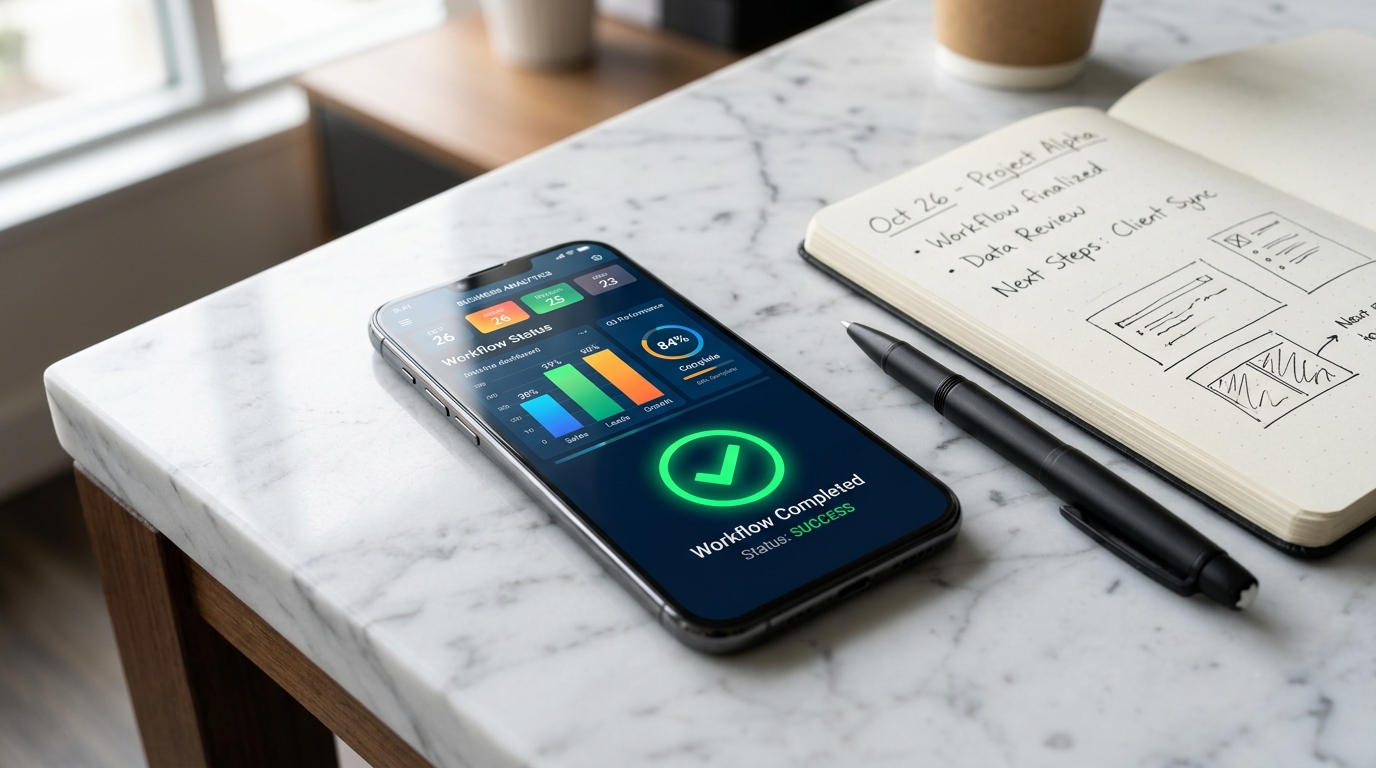
We approach every new feature as a modular component. When we improve the entity extraction engine in one app, that upgrade can be systematically pushed to our other products, ensuring continuous iteration without disrupting the core user experience.
Step 5: How should teams measure the success of AI-powered applications?
The final step is continuous evaluation based on strict decision criteria. For any company evaluating or building these tools, success cannot be measured by the sophistication of the underlying technology. It must be measured by the reduction of friction.
I recommend teams evaluate their mobile tools using a simple framework:
- Speed to Outcome: Does the application reduce the time it takes to complete a specific task compared to traditional methods?
- Contextual Awareness: Does the software anticipate user intent based on the active screen, or does it require manual prompting?
- Hardware Reliability: Does the solution perform consistently whether running on an iPhone 14 or a standard mid-tier device?
- Error Recovery: When an intelligent feature misinterprets a command, is the fallback mechanism easy for the user to correct?
At NeuralApps, our identity is built on these questions. We are not just participating in a technology trend; we are systematically translating algorithmic advancements into practical, reliable, and user-centric products. By adhering to this step-by-step philosophy, we ensure our applications remain indispensable tools for the professionals who rely on them.